Automated pallet warehouses
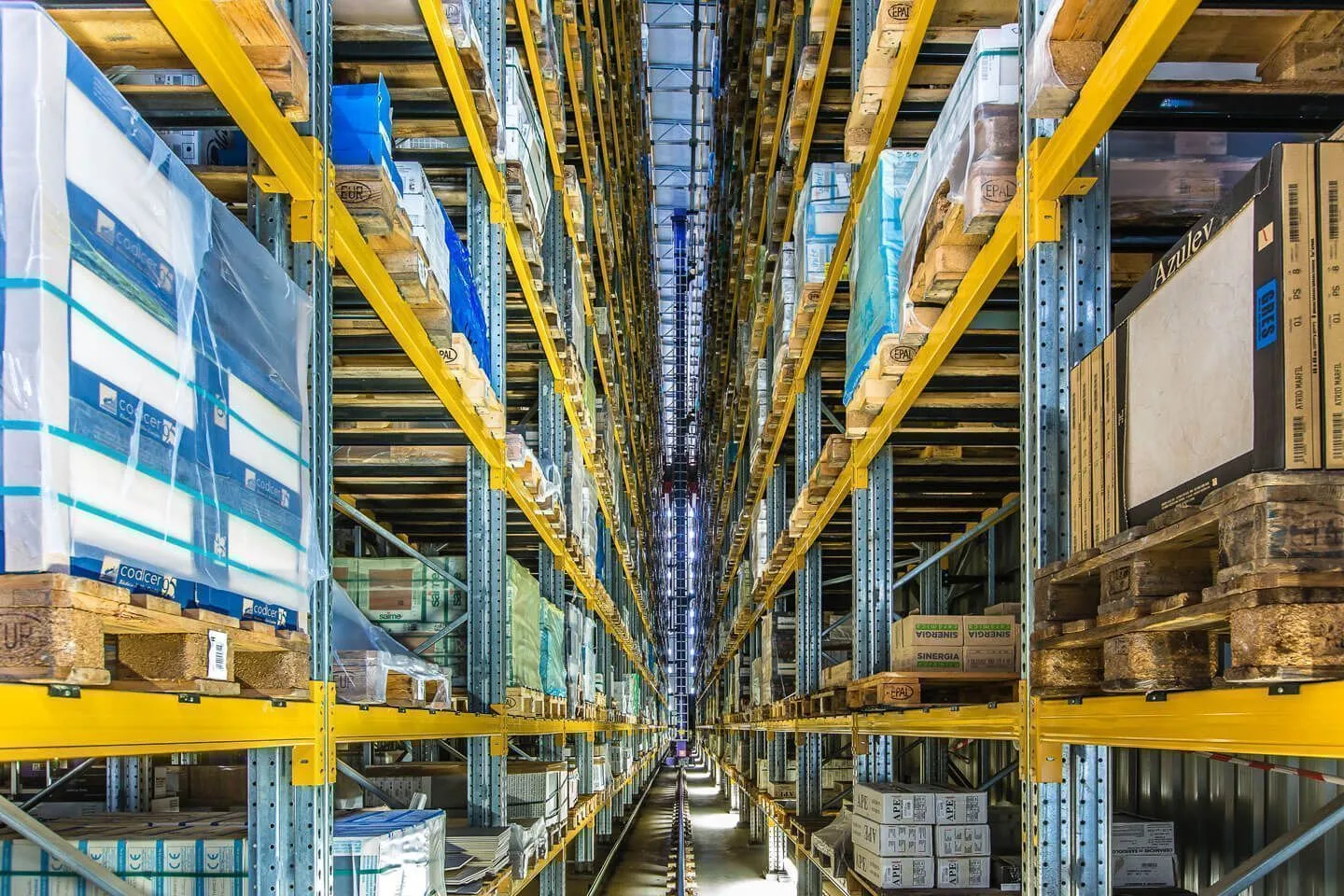
- Store more in less space (up to 45 m high)
- Automatic operation 24/7
- No staff in the corridors = greater safety
- Speed and stock levels always under control


Automated pallet warehouses are high-capacity AS/RS systems engineered to manage palletized loads using robotic equipment.
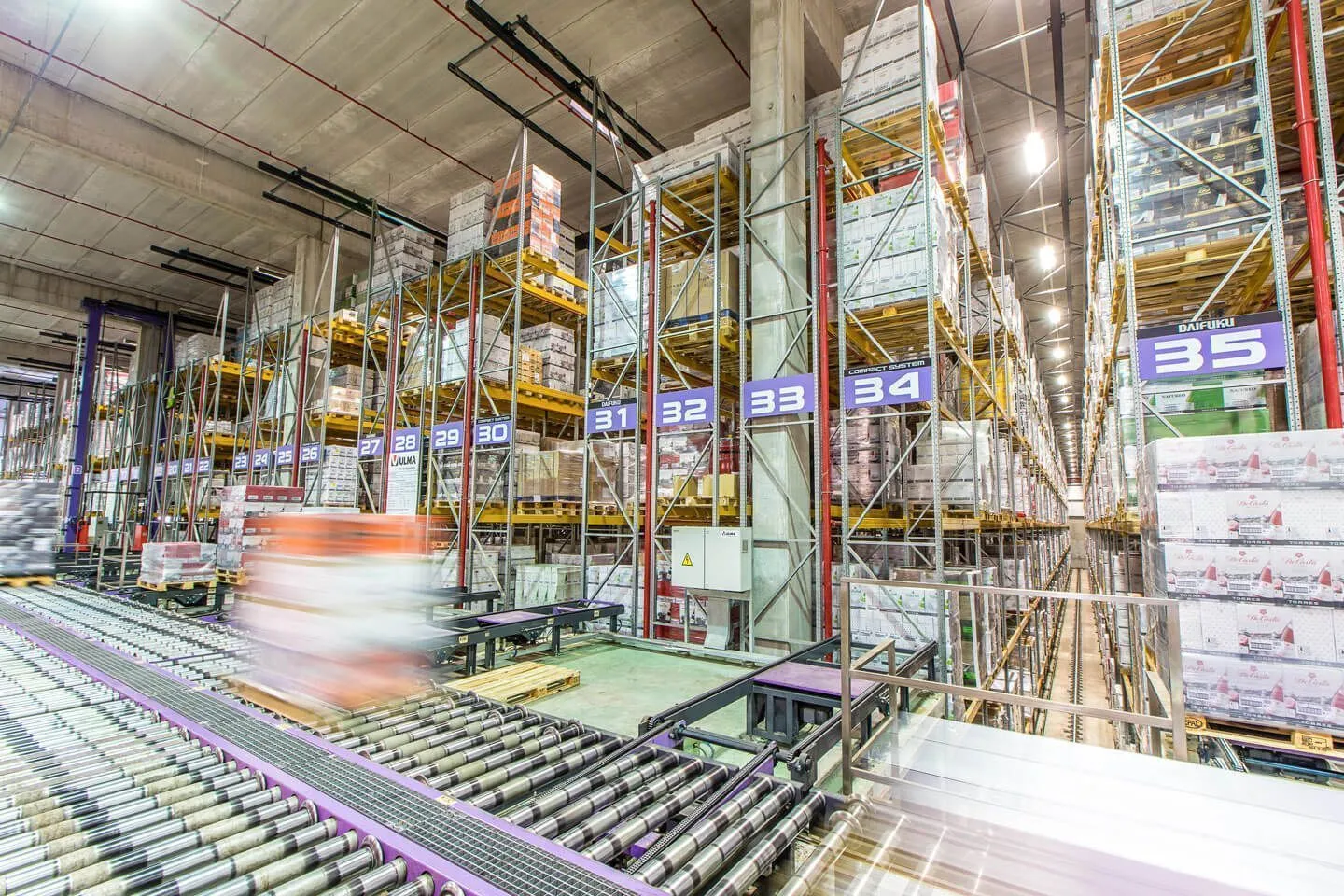
These systems combine high-bay pallet racking with robotic equipment that autonomously handles all inbound, storage, and outbound operations.
Unlike manual or semi-automated warehouses, operators never need to enter the storage aisles. Stacker cranes and shuttles move through the metal structure, performing all load-handling movements. This significantly improves safety, storage capacity, speed, and inventory accuracy.
Automation equipment for palletized loads
Automation for palletized loads can be implemented using different systems, depending on operational requirements. The most common are the stacker crane and the shuttle, two independent systems that can be deployed separately or in combination.
Stacker cranes
The stacker crane is the most widely used robotic system for automating palletized loads at height. It operates autonomously within the aisle, managing pallet inbound and outbound movements with precision and high speed, in both conventional pallet racking and compact storage systems.
Shuttle
The shuttle is a motorized carrier that moves autonomously on rails integrated into the rack levels. It receives the load from the stacker crane and places it in the assigned position within the channel. While the stacker crane works in the aisles, the shuttle operates at rack level.
Structural design of automated pallet warehouses
Both shuttle systems and stacker cranes can be installed in existing industrial buildings or in clad-rack warehouses. The choice depends on available land, target height, and the company’s growth projections.
Automation in an existing building
When you already have an industrial building with the required height and structural resistance, we install the racking structure within the existing infrastructure. This is the most efficient option in terms of time and cost when the building is compatible with the system requirements.
Clad-rack warehouse
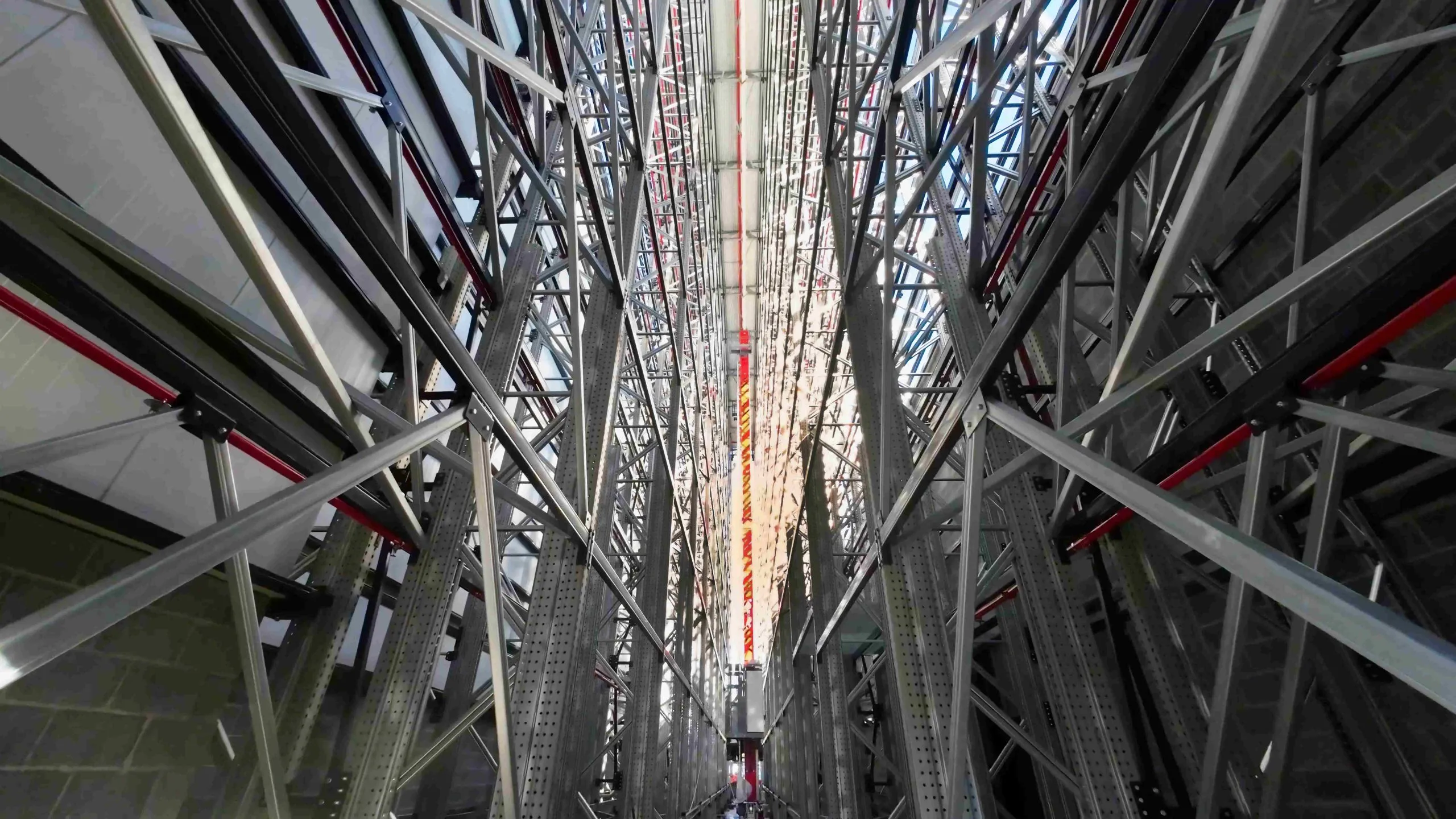
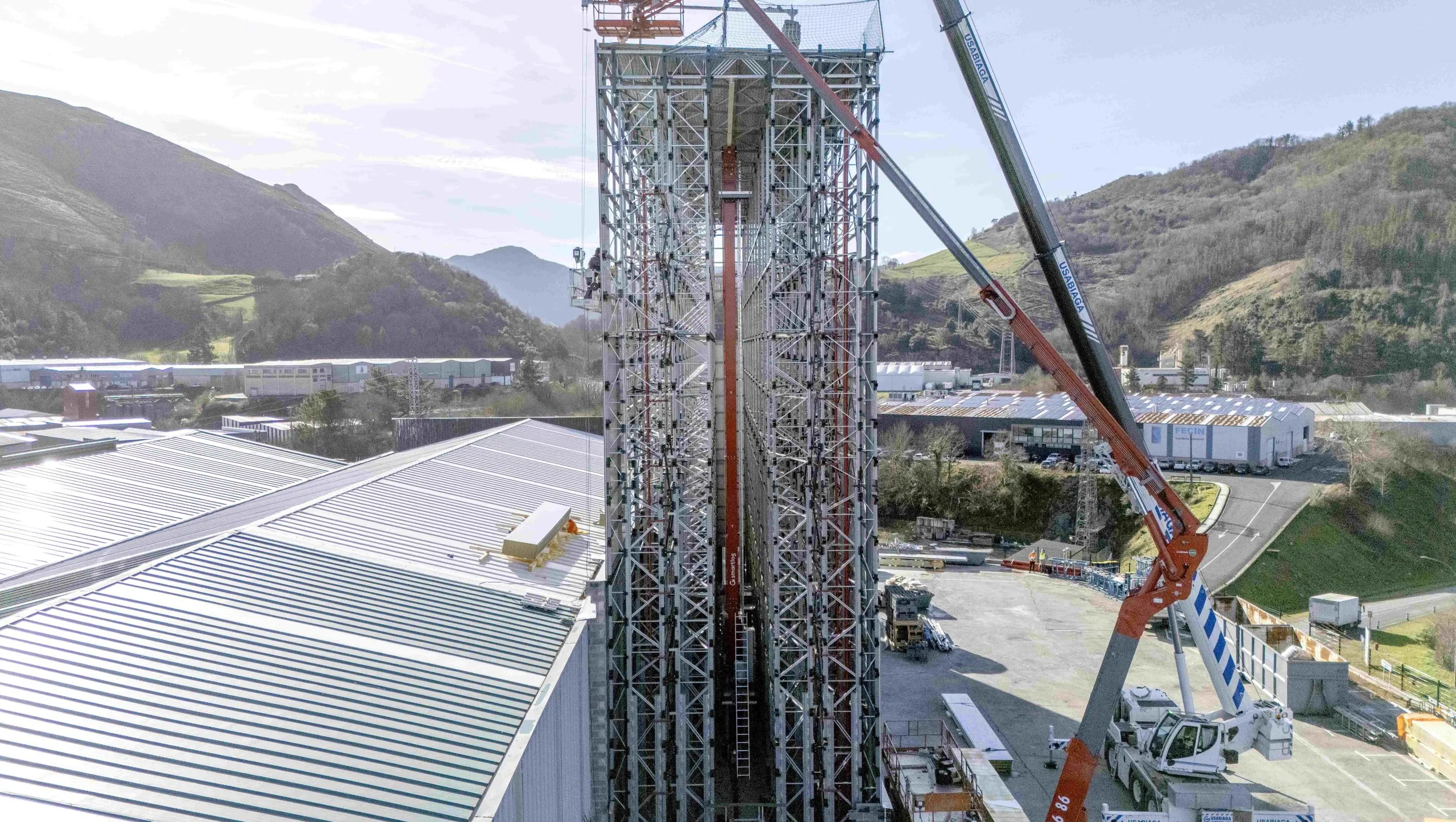
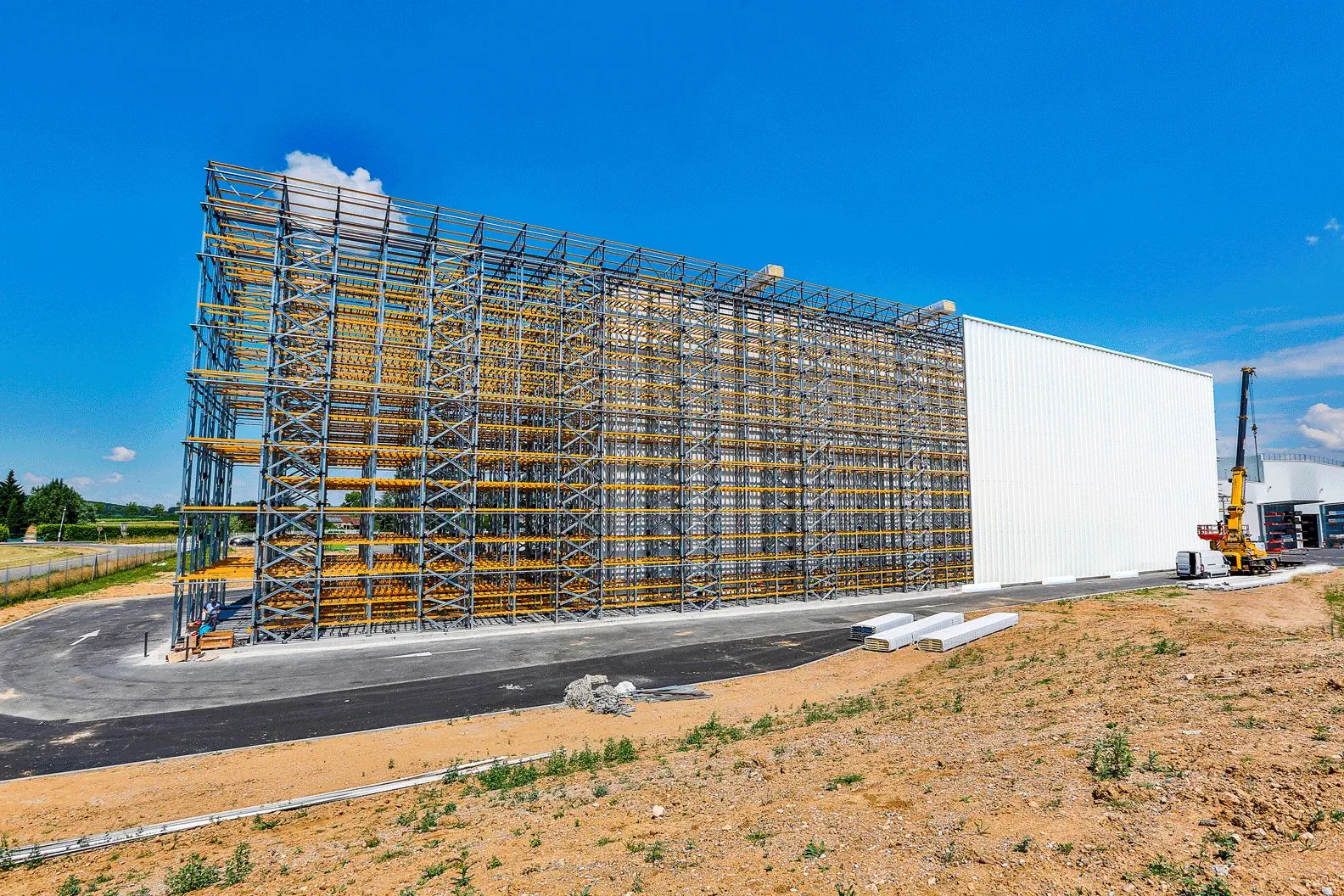
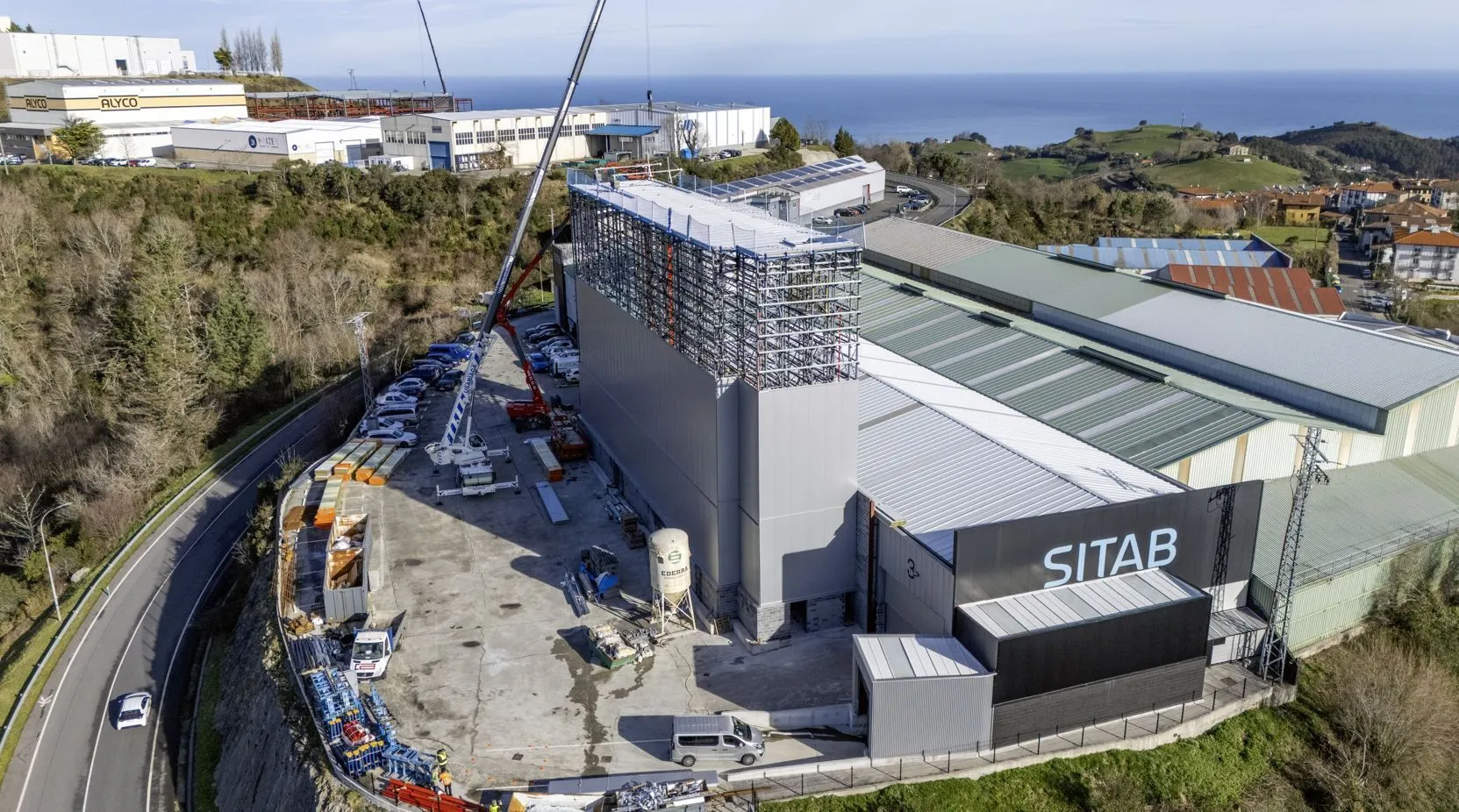
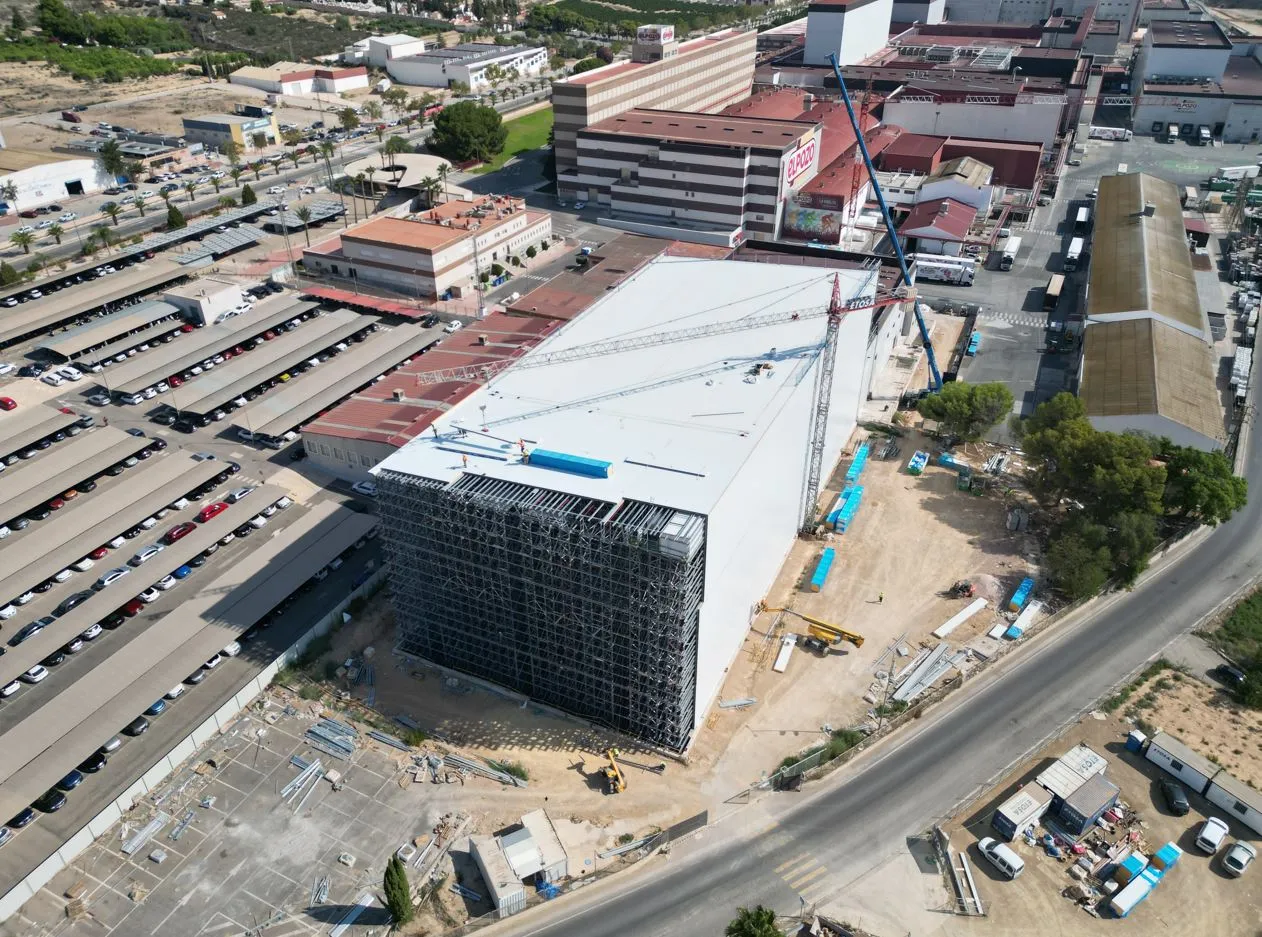
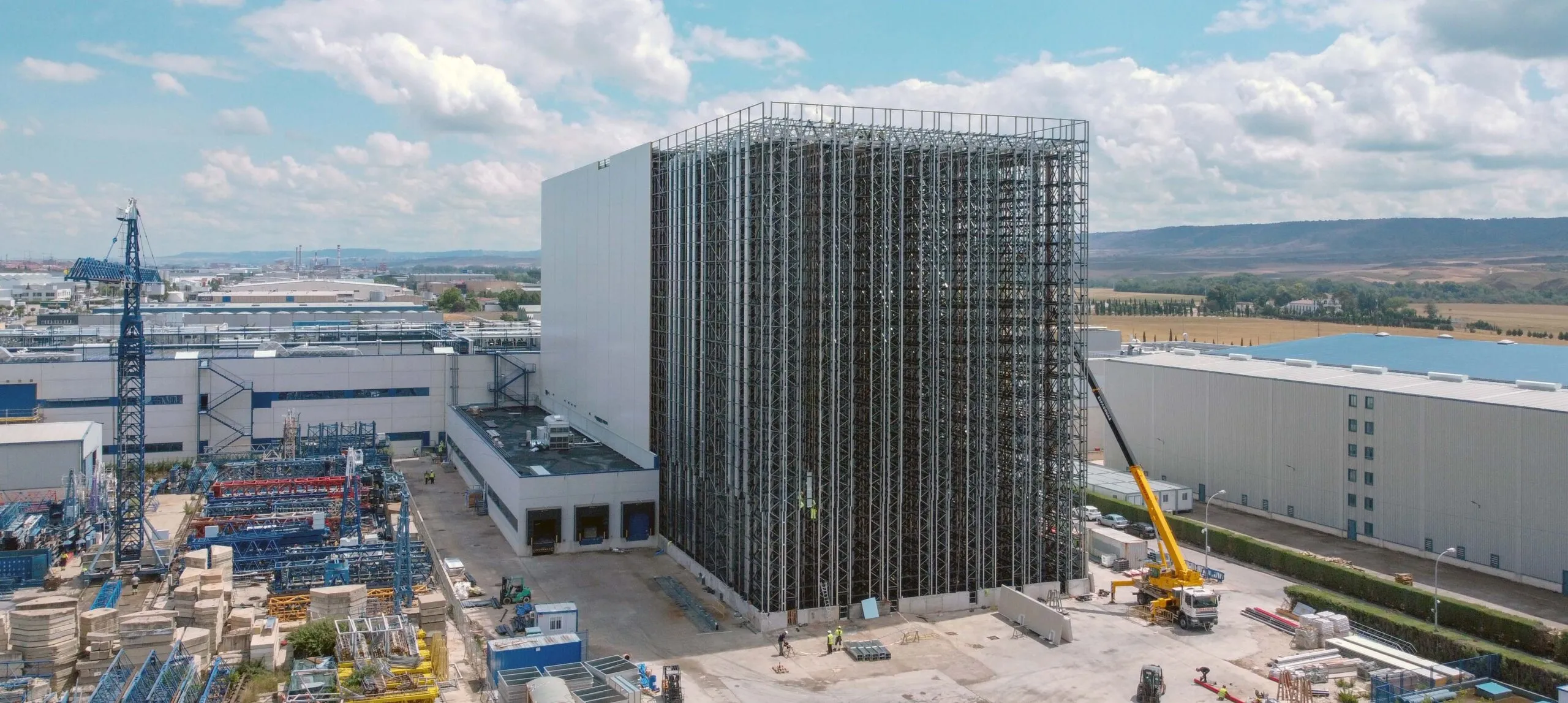
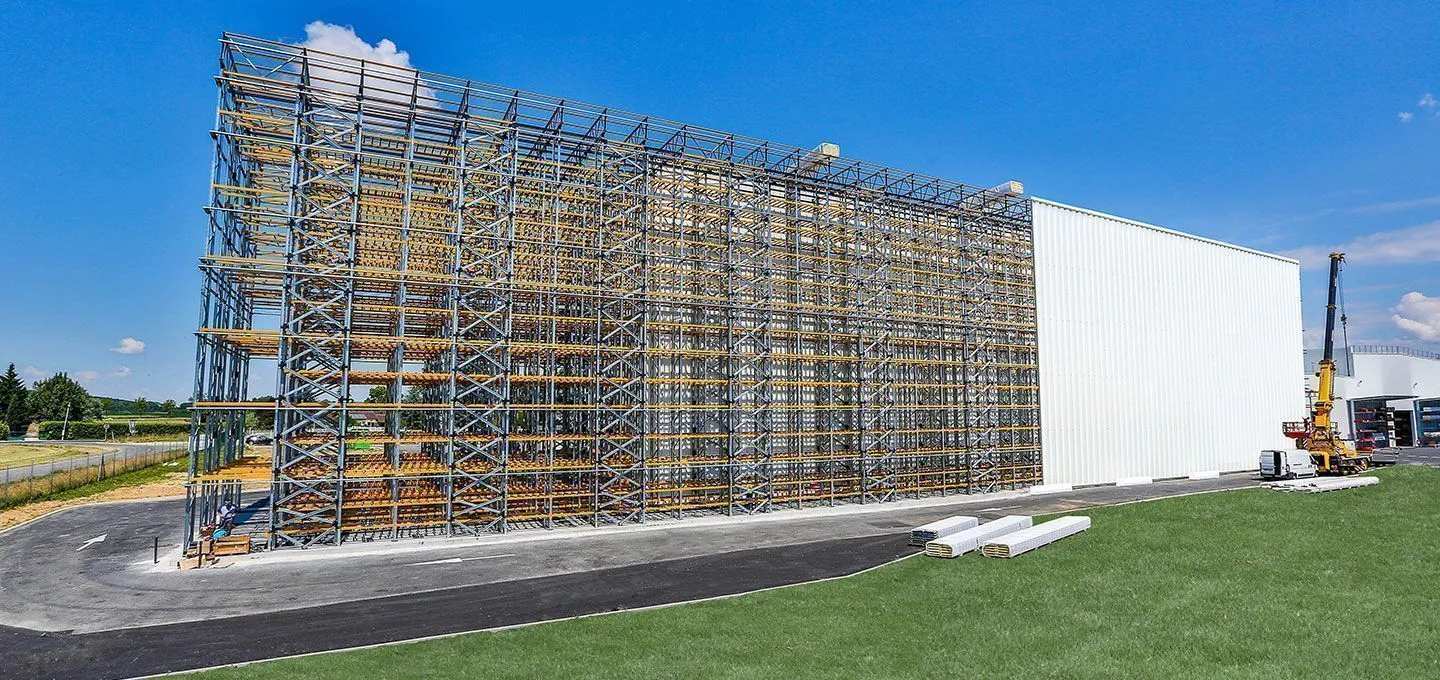
In projects where the goal is to maximize height and storage density, or when available land is limited, the racking structure itself forms the building. Walls and roof are anchored directly to the rack uprights, eliminating the need for conventional civil works and reducing the total project cost.
Related projects
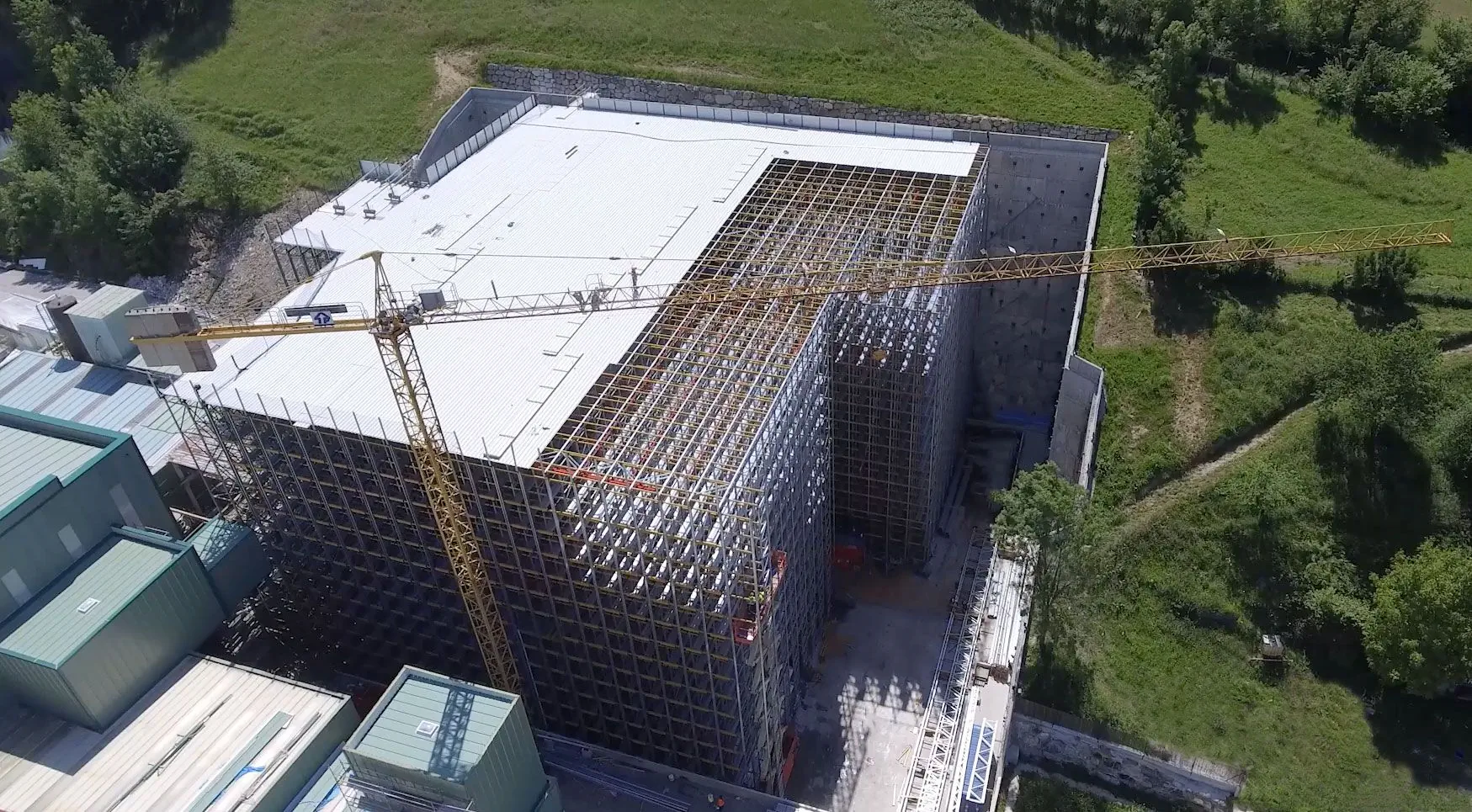
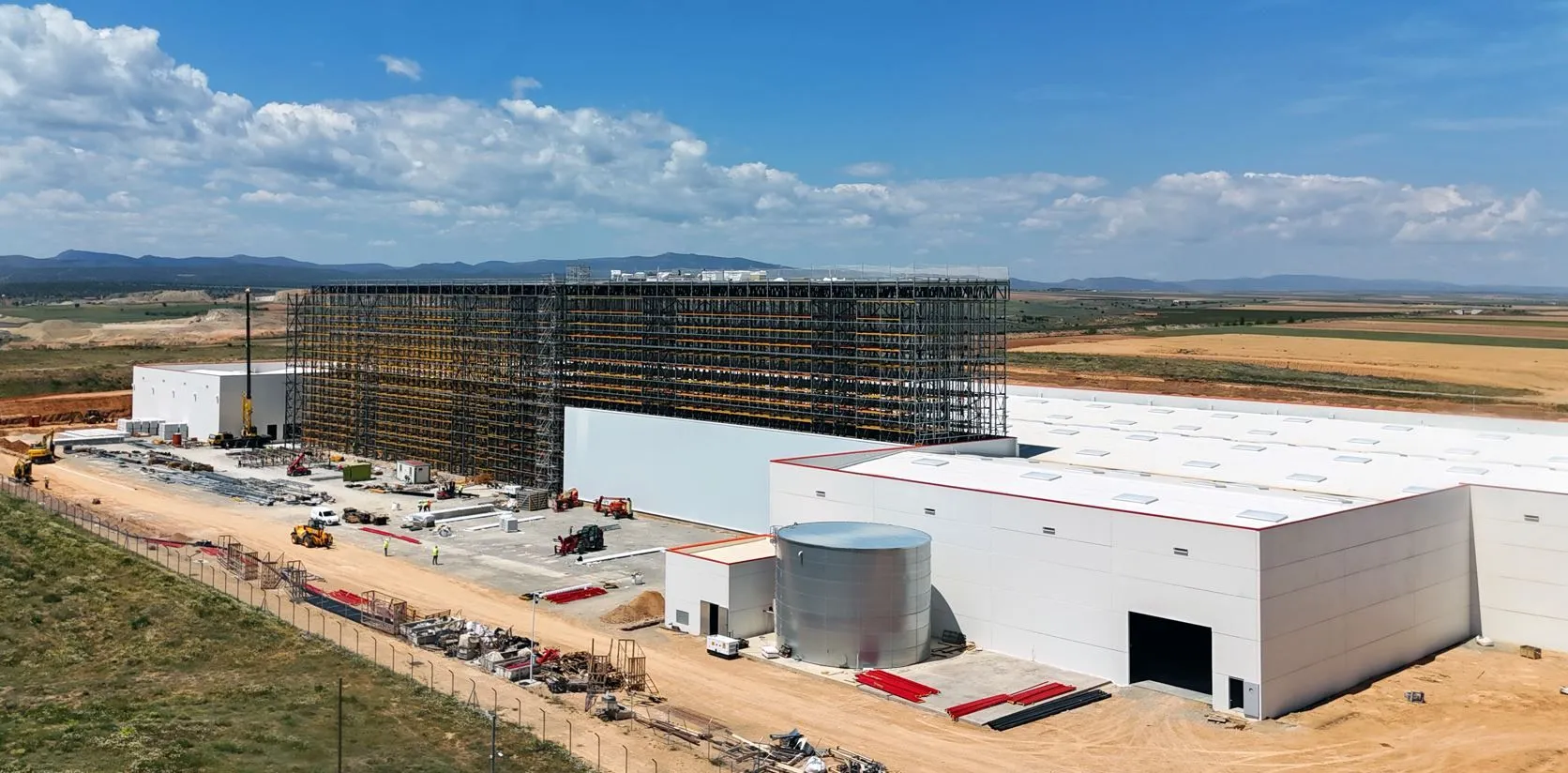
Do you have a project for an automated pallet warehouse?
Our engineering team works with you and your integrator from the design phase to ensure a precise, safe structure fully adapted to the automated system.
Benefits of automated pallet warehouses
Both shuttle systems and stacker cranes can be installed in conventional warehouses or self-supporting warehouses. The choice depends on the available floor space, the target height and the business’s growth forecasts.
Maximum vertical space usage
Reach heights of up to 45 meters or more, maximizing storage capacity within the available footprint.
Optimized aisles
Working aisles are minimal, increasing storage density compared with manual systems.
More capacity in less space
Extreme height combined with reduced aisles allows more pallets to be stored in the same area than with manual systems.
24/7 continuous operation
Robotic equipment operates without interruption, ensuring full availability for loading and unloading at any time.
Flexible configurations
Compatible with conventional pallet racking (direct access to each pallet) or compact storage systems (FIFO or LIFO).
Operator safety
Operators never access high storage areas, eliminating risks of falls or forklift-related accidents.
Speed and productivity
Stacker cranes and shuttles perform a high number of movements per hour, significantly increasing operational capacity compared with manual systems. When shuttles operate simultaneously with stacker cranes, operating speed can be increased even further.
Tailor-made solution
If you’re not sure which storage solution best suits your needs, please get in touch with us.
We’ll help you set up your project.
Frequently Asked Questions
What is the difference between a stacker crane and a shuttle?
The stacker crane moves vertically through the aisles between racks to place and retrieve pallets, while the shuttle moves horizontally within the rack channels. The stacker crane brings the pallet to the correct level, and the shuttle transports it to the exact position within the channel.
Do stacker cranes and shuttles work in refrigerated or freezer rooms?
Yes. Stacker cranes and shuttles are designed to operate in refrigerated or freezer environments. By reducing door opening times, they contribute to significant energy savings, and they also reduce the presence of operators inside, preventing prolonged exposure to low temperatures.
Can automated and manual zones be combined in the same warehouse?
Yes. Hybrid warehouses are common: high-turnover areas are automated, while low-turnover or special products are managed manually.
Can I automate my current pallet warehouse?
It depends on the characteristics of your building: available height, floor load capacity, racking layout, and aisle space. The integrator of the automated systems carries out a technical feasibility study to determine whether automation is possible and what adaptations would be required.
Are POLYPAL racking systems compatible with any integrator?
Yes. Our engineering team works directly with the technical requirements of each integrator to ensure the dimensional, load-bearing, and precision compatibility required by the automated system.
What height can an automated pallet warehouse reach?
It depends on the chosen system and structural design. In clad-rack warehouses, heights exceeding 40 meters are common, making maximum use of the available volume.


