Is your warehouse prepared to continue growing? Discover what solutions you have to expand storage capacity
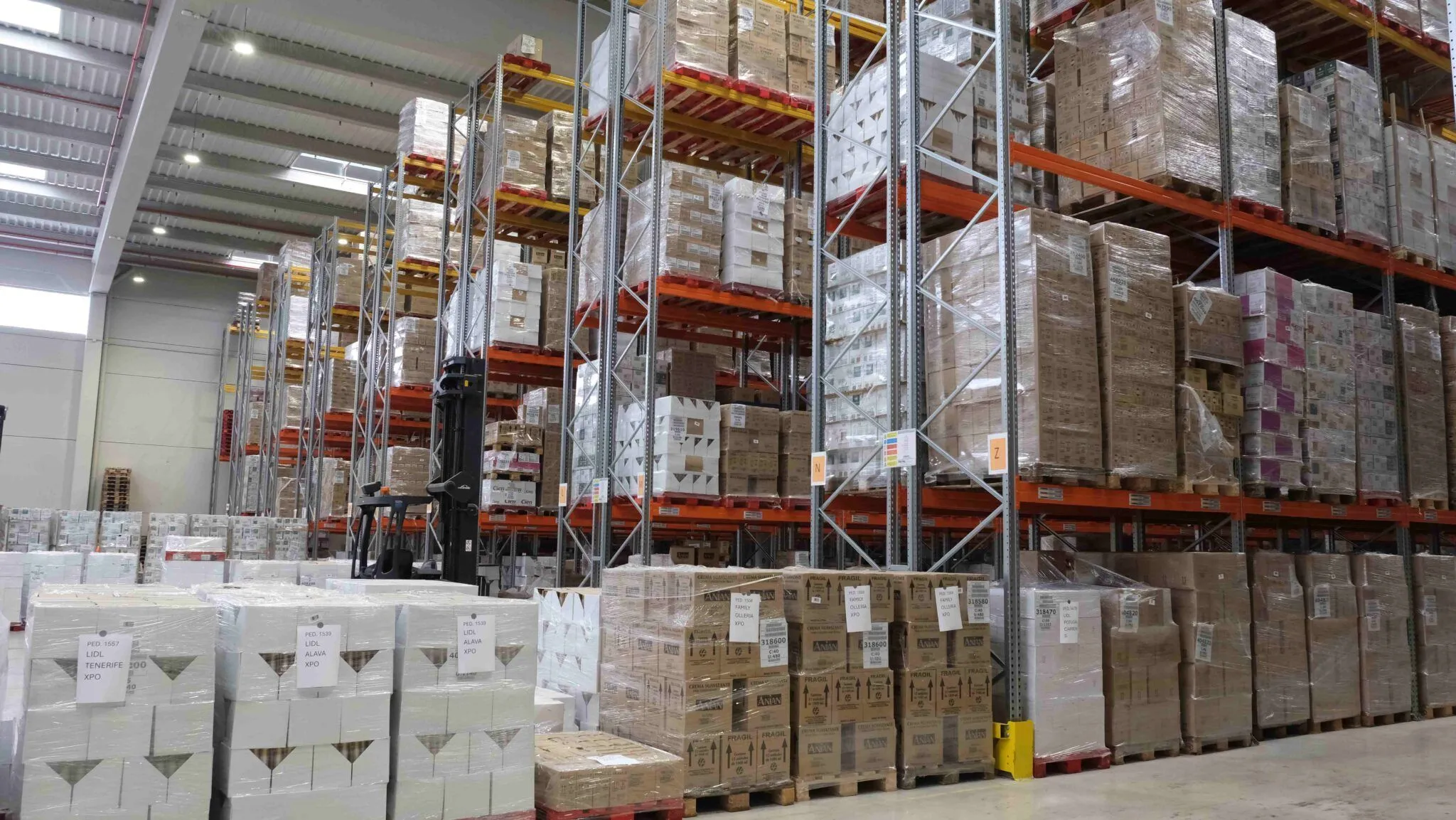

In a business context marked by growth and accelerating demand, companies face a logistical challenge that becomes a bottleneck for their development: lack of storage space.
It is at this point that many companies realize that their warehouse is no longer prepared to support their growth. In this scenario, the company must assess whether it is more profitable to optimize the existing space or whether it is advisable to expand the warehouse with new facilities.
In this article, we address the available options and the different storage solutions that allow you to gain storage capacity without increasing the square footage of the warehouse, as well as the viable alternatives when you decide to take the leap to a physical expansion.
Optimize current storage capacity: make the most of the available space
Before considering a change of building or expansion, many warehouses have room for improvement within their current space. Optimizing the storage system requires reorganizing and adapting the warehouse layout, the type of racking, and the operational flows.
How to do it? By opting for storage systems that maximize usable space.
1. CHANGING THE TYPE OF RACKING CAN GENERATE A SIGNIFICANT INCREASE IN STORAGE CAPACITY:
- Compact racking (drive-in / drive-through): Allows you to store large volumes of the same reference, eliminating intermediate aisles. Ideal for homogeneous products with a high number of pallets or FIFO/LIFO system.
- Dynamic racking (pallet live): Uses inclined rollers for the movement of pallets or boxes by gravity. Excellent option to increase density. In a warehouse with dynamic racking, intermediate aisles are eliminated, which increases storage capacity.
- Racking on mobile bases: The racking is mounted on motorized bases that move to eliminate fixed aisles and allow access only to the necessary module. They require a greater investment than other types of racking, but they allow increasing capacity without losing accessibility.
- Narrow aisle racking: These are conventional racking systems designed with reduced aisles, which allows better use of the warehouse volume. They increase storage capacity without losing direct access to each pallet. They require the use of trilateral forklifts.
2. STORAGE AT HEIGHT:
Are you making the most of the usable height of the warehouse? Solutions to take advantage of the vertical volume of your warehouse:
- High-bay racking: It is common to find warehouses whose racking only occupies 4-5 meters in height, when they could reach many more meters. Take advantage of the height of your warehouse to increase storage capacity.
- Mezzanines or metal mezzanines: They are installed to create additional storage levels. They allow you to get the most out of the available volume and enable new storage areas that were not previously used.
3. AUTOMATION:
By installing robotic equipment that handles the load, we optimize spaces, volumes and times.
- Shuttle: This solution uses a motorized cart to transport the load, usually pallets, inside the racking. It is one of the most suitable systems for warehouses with high merchandise turnover and a large volume of pallets per reference.
- Stacker cranes: These are robotic equipment for the handling of palletized loads that move vertically and horizontally through narrow aisles to locate or collect load units. Very useful in high-bay warehouses.
- Miniloads: They are designed for handling light loads such as boxes or trays. Perfect for warehouses with high turnover of small parts and intensive picking operations.
Warehouse expansion: when optimizing is no longer enough
If, after optimizing the existing warehouse, sustained growth is still expected, it may be time to think about a structural expansion. Faced with this situation, we have several options:
1. CLAD-RACK WAREHOUSE:
This is a warehouse where the metal racking itself forms the supporting structure of the building. The roof and side enclosures are supported on these racks, thus avoiding the need to build a conventional building and carry out civil works.
When is it advisable to opt for a clad-rack warehouse?
- When there is a limited land available, but you can build upwards.
- When looking for a high-performance automated solution from the beginning.
- When you want to avoid the costs and times of a conventional building plus its subsequent equipment.
ADVANTAGES:
- Maximum use of space at height: Clad-rack warehouses can reach up to 40 meters in height, therefore, they have a high storage density compared to a conventional warehouse. In addition, in areas where logistics land is scarce or especially expensive, taking advantage of space at height becomes a strategic advantage.
- Lower structural cost: Columns, beams and auxiliary structures that occupy space and make civil works more expensive are eliminated.
- Shorter construction time: The construction of the warehouse and the storage system is simultaneous, which shortens the deadlines compared to a traditional building. While the construction of a conventional warehouse takes more than a year, in 5 or 6 months we can have the clad-rack warehouse built.
- Ideal for automation: Clad-rack warehouses are designed to integrate with stacker cranes, miniloads or shuttles.
2. CONSTRUCTION OF A NEW BUILDING:
This option allows you to design from scratch a facility fully adapted to the current and future needs of the company.
ADVANTAGES:
- Greater flexibility of use
A traditional building can be used for multiple functions (storage, offices, production, preparation areas, etc.), not just storage. The clad-rack warehouse is designed exclusively for storage. - Possibility of future changes
In a conventional building you can reconfigure the layout or change the storage systems. In a clad-rack warehouse, any structural change is much more complex. - Greater ease of incorporating different types of storage
In a conventional warehouse you can combine different areas with racking for pallets, manual picking area, temperature-controlled areas, among others. The clad-rack warehouse is usually more limited to one type of load and system.
However, if we choose to build a new warehouse, we must take into account some considerations:
- High initial investment: It involves a large investment in land, construction, permits, and licenses.
- Prolonged execution time: From the acquisition of the land to the start-up of the warehouse, more than a year can pass.
- Scarcity of logistics land: Currently, there is a critical limitation in the availability of well-located industrial land, especially in metropolitan areas or near major communication routes. In addition, the price per square meter has skyrocketed, which makes this option more expensive and less accessible.
Is your warehouse at its limit? Find out in less than 5 minutes with this template.
Download this self-assessment template and discover if your warehouse can be optimized or if it's time to consider an expansion.
DownloadOptimization, New Warehouse, or Clad-Rack Warehouse?
Reaching the capacity limit in your warehouse does not have to stop the growth of your company. Optimizing the current storage system allows you to obtain quick results with a minimal investment. However, when growth is sustained and the current operation no longer meets the needs, expanding the facilities may be the most strategic decision. Each option responds to different logistical needs.

Once the options have been compared, the decision will depend on the degree of current saturation, the growth projection, and the available resources. If you have not yet explored all the optimization possibilities, it may be more profitable to act on the existing warehouse. But if you are already at the operational limit and need to scale with guarantees, it is time to assess a structural expansion. Each warehouse has an inflection point. The important thing is to anticipate and make decisions that align your logistics with the objectives of the business.
At POLYPAL, we help you take the next step: from redesigning your current warehouse with new storage solutions that allow you to make the most of the existing space, to equipping a warehouse from scratch or building a clad-rack warehouse fully adapted to your operation.
To improve the order preparation process, there is a wide variety of accessories for picking shelves designed to maximize the efficiency of the storage system and adapt it perfectly to the operational needs of the warehouse, such as removable drawers, plastic boxes, vertical dividers, etc.
A well-planned layout and an adapted storage system are crucial to optimize warehouse efficiency and improve order preparation.


